01THE DECISION FRAMEWORK
Make the two models answer the same trail question.
Choose a structured Asolo model when rough terrain and carried load justify it; choose a lighter mid when flexibility and lower fatigue better match the route. Both choices are kept visible throughout the article so you can compare the exact listings, fit lanes and route roles without losing one side of the decision.
The footwear category should follow the route. Surface, weather, carried weight and foot shape matter more than whether a product is marketed as a boot, shoe or trail runner. For this topic, the most dependable process is to move through four checks in order and resist changing everything at once.
01Define the hardest regular trail
Define the hardest regular trail is not a box to check once. Evaluate the roughest regular trail surface in the same conditions in which you expect to use the setup. For “Asolo hiking boots vs lightweight boots,” this step helps separate a feature that sounds useful from one that changes comfort or control on the trail. Make the smallest reasonable adjustment, keep every other variable steady, and record what improved. If the result creates a new pressure point, movement problem or access problem, reverse it before adding another change.
02Estimate carried load
Estimate carried load is not a box to check once. Evaluate wet-weather and temperature exposure in the same conditions in which you expect to use the setup. For “Asolo hiking boots vs lightweight boots,” this step helps separate a feature that sounds useful from one that changes comfort or control on the trail. Make the smallest reasonable adjustment, keep every other variable steady, and record what improved. If the result creates a new pressure point, movement problem or access problem, reverse it before adding another change.
03Compare edging and flex
Compare edging and flex is not a box to check once. Evaluate pack weight and trip duration in the same conditions in which you expect to use the setup. For “Asolo hiking boots vs lightweight boots,” this step helps separate a feature that sounds useful from one that changes comfort or control on the trail. Make the smallest reasonable adjustment, keep every other variable steady, and record what improved. If the result creates a new pressure point, movement problem or access problem, reverse it before adding another change.
04Avoid buying maximum support by default
Avoid buying maximum support by default is not a box to check once. Evaluate your heel, forefoot and instep shape in the same conditions in which you expect to use the setup. For “Asolo hiking boots vs lightweight boots,” this step helps separate a feature that sounds useful from one that changes comfort or control on the trail. Make the smallest reasonable adjustment, keep every other variable steady, and record what improved. If the result creates a new pressure point, movement problem or access problem, reverse it before adding another change.
Where the Asolo Fugitive GTX–Merrell Moab Speed 2 Mid GORE-TEX comparison changes
The deciding moment for Asolo hiking boots vs lightweight boots is not the first step but the first repeated stress. Use Asolo Fugitive GTX and Merrell Moab Speed 2 Mid GORE-TEX on a familiar incline, allow time for swelling and lace settling, and separate fit, traction and fatigue in the notes. That makes the next comparison specific instead of starting the entire search again.
More structure is useful only when it improves control without creating avoidable fatigue or fit pressure. Treat that statement as a boundary for the decision. It prevents a useful adjustment from being pushed so far that it creates a new problem. The goal is not maximum cushioning, maximum waterproofing, maximum traction or minimum weight. The goal is enough of the correct feature for the conditions you actually meet.
For Asolo hiking boots vs lightweight boots, the relevant field signals are the roughest regular trail surface, wet-weather and temperature exposure, pack weight and trip duration, your heel, forefoot and instep shape. Put those signals into this trip’s plan before shopping so ratings and brand familiarity cannot overrule the route.
02TWO EQUAL SHOPPING LANES
Keep Asolo Fugitive GTX and Merrell Moab Speed 2 Mid GORE-TEX equally visible.
PRIMARY LANEAsolo Fugitive GTX
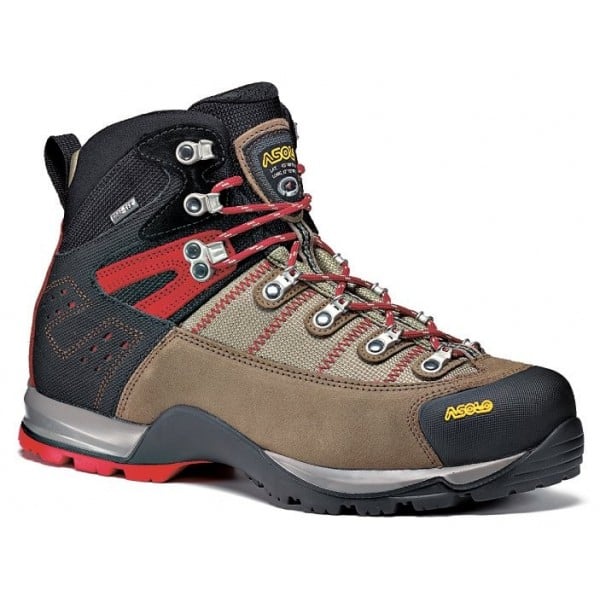
The Fugitive GTX is a structured Asolo hiking model for trekkers who want a supportive platform and waterproof protection. Expect a more precise, supportive fit than a soft day hiker; verify width, instep pressure and flex before committing to break-in.
Check exact model on Amazon↗ALTERNATIVE LANEMerrell Moab Speed 2 Mid GORE-TEX
The Moab Speed 2 Mid GORE-TEX takes the Moab name in a lighter, more athletic direction for hikers who value an easier stride. A fast-feeling upper should still hold the heel firmly; test side steps and descents before choosing it for rough ground.
Check exact model on Amazon↗ 03CONTROLLED TRAIL TEST
Test Asolo hiking boots vs lightweight boots without changing the question.
Try the footwear late in the day with the intended socks and insole. Walk an incline, make controlled side steps and confirm that the toes remain clear downhill. Keep the route familiar and the intended socks, insole and load unchanged so the result belongs to Asolo hiking boots vs lightweight boots, not to an accidental second variable.
- 01
Define the hardest regular trail
Begin at home where the setup can be changed without consequence. Focus on “define the hardest regular trail.” The purpose is to create evidence about Asolo hiking boots vs lightweight boots, not to prove that a purchase was correct. Stop when the setup produces sharp pressure, instability, unsafe traction or a problem that grows with every minute.
- 02
Estimate carried load
Repeat the check after ten to fifteen minutes of movement. Focus on “estimate carried load.” The purpose is to create evidence about Asolo hiking boots vs lightweight boots, not to prove that a purchase was correct. Stop when the setup produces sharp pressure, instability, unsafe traction or a problem that grows with every minute.
- 03
Compare edging and flex
Add a hill, uneven surface or realistic pack load. Focus on “compare edging and flex.” The purpose is to create evidence about Asolo hiking boots vs lightweight boots, not to prove that a purchase was correct. Stop when the setup produces sharp pressure, instability, unsafe traction or a problem that grows with every minute.
- 04
Avoid buying maximum support by default
Finish by writing down the first problem—not only the overall impression. Focus on “avoid buying maximum support by default.” The purpose is to create evidence about Asolo hiking boots vs lightweight boots, not to prove that a purchase was correct. Stop when the setup produces sharp pressure, instability, unsafe traction or a problem that grows with every minute.
Common mistakes to avoid
- 01Letting Asolo Fugitive GTX keep a fit advantage that Merrell Moab Speed 2 Mid GORE-TEX was not given the same socks or width to earn—that blurs the cause of the result and weakens the Asolo hiking boots vs lightweight boots decision.
- 02Comparing Asolo Fugitive GTX and Merrell Moab Speed 2 Mid GORE-TEX on different inclines, loads or warm-up times—that blurs the cause of the result and weakens the Asolo hiking boots vs lightweight boots decision.
- 03Treating a waterproof label as a complete answer to outsole, collar, heat and drying needs—that blurs the cause of the result and weakens the Asolo hiking boots vs lightweight boots decision.
- 04Keeping the familiar brand after the other model produces better repeatable control—that blurs the cause of the result and weakens the Asolo hiking boots vs lightweight boots decision.
For Asolo hiking boots vs lightweight boots, use this rejection boundary: The best choice is the least bulky option that still controls the hardest conditions you regularly face. If the same failure returns after a fair repeat, another size, shape, material or model is a better next test than another workaround.
04PEOPLE ALSO ASK
Five direct answers.
What is the quickest answer in “Asolo Hiking Boots vs Lightweight Hiking Mids”?
Choose a structured Asolo model when rough terrain and carried load justify it; choose a lighter mid when flexibility and lower fatigue better match the route. More structure is useful only when it improves control without creating avoidable fatigue or fit pressure.
How do the two models in “Asolo Hiking Boots vs Lightweight Hiking Mids” differ in wet conditions?
Asolo Fugitive GTX is a waterproof version; Merrell Moab Speed 2 Mid GORE-TEX is a waterproof version. Waterproofing is only one filter—outsole, fit, collar and drying needs still matter.
Which terrain changes the result in “Asolo Hiking Boots vs Lightweight Hiking Mids”?
Asolo Fugitive GTX is cataloged for rocky trekking and backpacking. Merrell Moab Speed 2 Mid GORE-TEX is cataloged for fast day hikes and rolling mixed trail, so the route—not brand reputation—should decide which lane is more relevant.
Should both models in “Asolo Hiking Boots vs Lightweight Hiking Mids” be tried in the same size?
Begin from the same foot measurements, but assess each model’s width, heel pocket, instep volume and downhill toe room independently. Size labels do not prove equal internal shape.
Where can shoppers compare both “Asolo Hiking Boots vs Lightweight Hiking Mids” listings?
Use the two separate exact-model Amazon buttons in this article and verify title, width, seller, condition and return terms for each listing.
FINAL VERDICTThe route-level answer to Asolo hiking boots vs lightweight boots.
Choose a structured Asolo model when rough terrain and carried load justify it; choose a lighter mid when flexibility and lower fatigue better match the route. Use the four checks, make one adjustment at a time and complete a controlled test before a longer or more consequential route.